biography
ABOUT THE AUTHOR
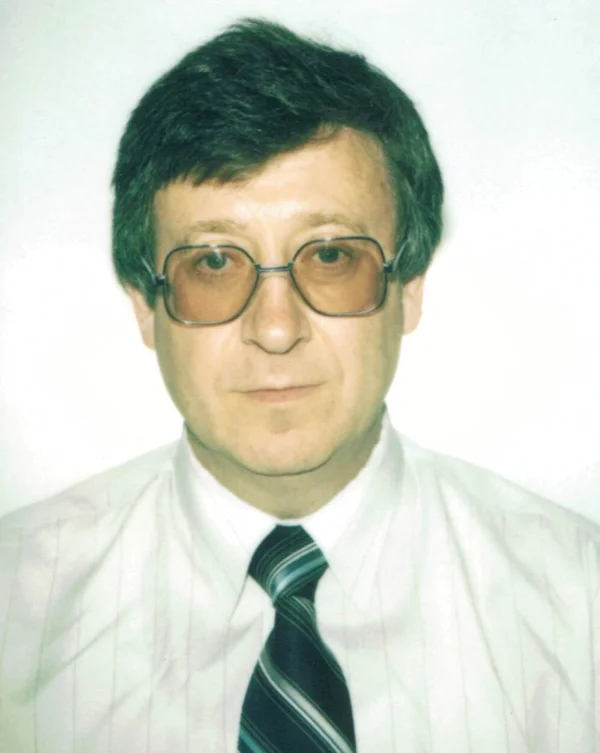
Dr. Emanouil Blias
Emanouil Blias has spent more than three decades helping students move from memorization to understanding. He holds a Doctor of Sciences in Physics and Mathematics, with a degree awarded by the Higher Attestation Committee of the Russian Federation in Moscow in 1990. He was a former full professor at Murmansk Technical University and head of the Mathematics Department at Murmansk Lyceum, with extensive experience in Russia and Canada. His philosophy is simple: question, define ideas carefully, and justify conclusions.
“Mathematics is not about speed or tricks. It is about disciplined thinking, intellectual honesty, and understanding.”
— Emanouil Blias
MORE ABOUT THE AUTHOR
Emanouil Blias’s academic career has been shaped by decades of work in both secondary and university mathematics education.
He earned the Doktor Fiziko-Matematicheskikh Nauk, a Doctor of Sciences degree in Physics and Mathematics awarded in 1990 by the Higher Attestation Committee of the Russian Federation in Moscow. The credential represents the highest academic scientific qualification in that system, reflecting years of advanced research and scholarly contribution.
Blias later served as a full professor at Murmansk Technical University while also leading the Mathematics Department at Murmansk Lyceum. Working across these two environments allowed him to see a recurring pattern in student learning. Many students could perform procedures correctly, yet struggled to explain the reasoning that made those procedures meaningful.
Beyond classroom teaching, he also participated in regional mathematical competitions through the Mathematical Contest Committee, contributing to the creation and evaluation of Olympiad-level problems. These experiences reinforced his belief that strong problem-solving depends on logical habits built early through definitions, proof structure, and careful mathematical language.
After relocating to Canada, he continued teaching and tutoring students from different educational systems. Although the curricula varied, the same conceptual gaps appeared again and again.
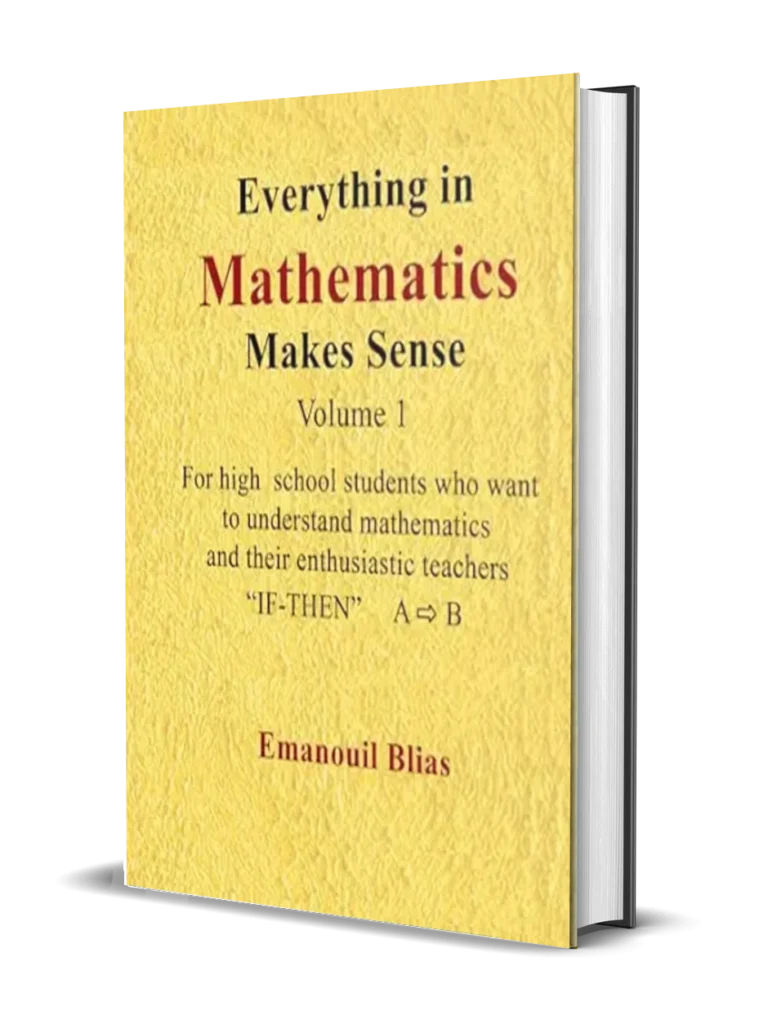
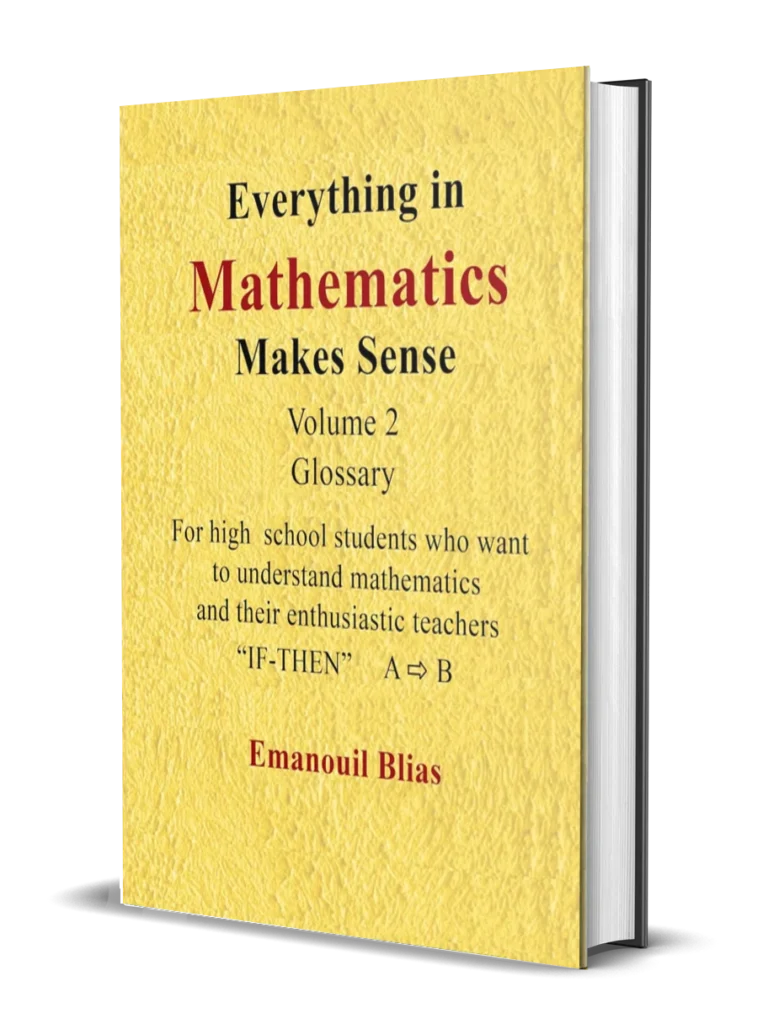
These observations eventually shaped the ideas behind his book Everything in Mathematics Makes Sense, where he invites students to slow down and see why mathematics works.
His goal is not faster answers but clearer thinking that students can trust long after exams are finished. That clarity remains the foundation.
THE BOOK COLLECTION
All Books
Two volumes. One journey. A deeper understanding of mathematics.